Submissive Meaning Explained Simply Definition, Examples
The term “submissive meaning” is commonly searched because people often hear the word submissive in conversations, relationships, social media, or personality discussions and want to know what it really means.
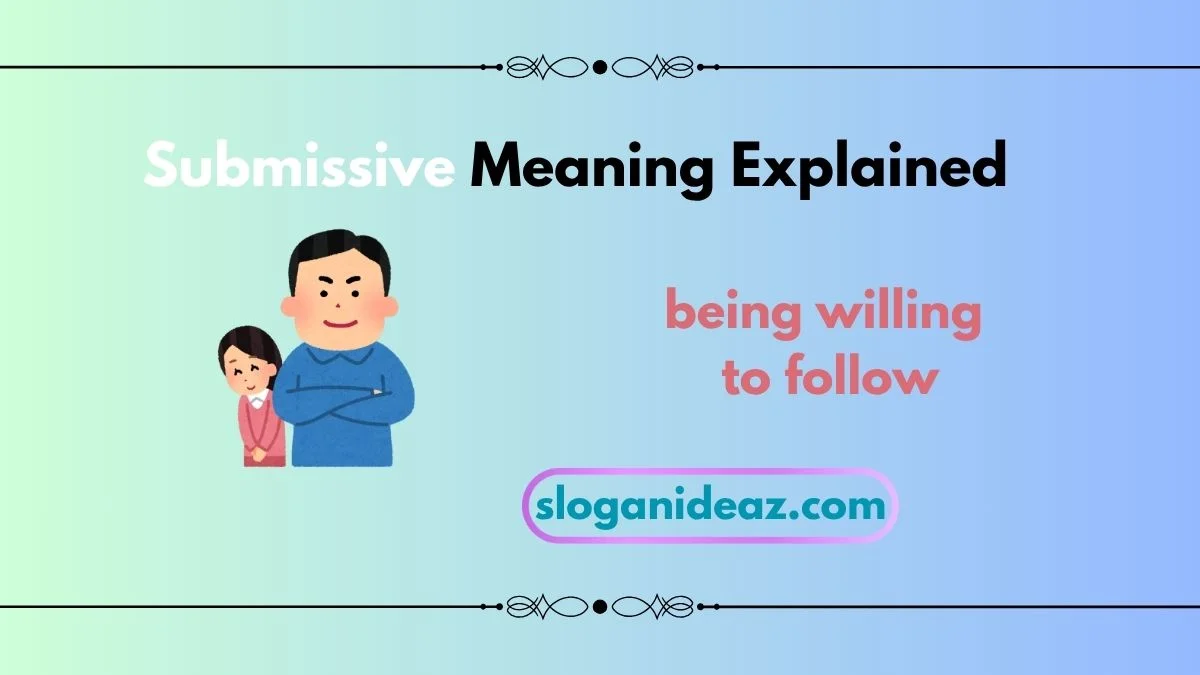
In simple English, submissive means willing to obey, follow, or accept someone else’s authority, control, or decisions.
However, the meaning of submissive can change depending on the context.
Sometimes it describes a calm, respectful personality, while in other situations it may refer to behavior in relationships or social roles.
Because the word can have different meanings, many people search online to understand whether it is positive, negative, or neutral.
In this guide, you will learn the true meaning of submissive, where it is used, examples, and how to respond when someone uses the term.
⚡ Quick Answer (Featured Snippet)
Submissive means being willing to follow, obey, or give control to another person instead of taking charge.
📚 Meaning in Daily Life
In everyday language, submissive meaning refers to someone who is quiet, cooperative, or less dominant in behavior.
For example:
- A person who avoids arguments
- Someone who prefers following instructions rather than leading
Example sentence:
- “He has a submissive personality and rarely disagrees.”
In this context, it usually describes behavior or personality.
💬 Meaning in Texting and Messaging
In texting, submissive may be used casually or seriously depending on the conversation.
Examples:
- “He seems really submissive.”
- “I’m more submissive in group decisions.”
Sometimes the word is used jokingly online, while other times it refers to personality or relationship dynamics.
❤️ Meaning in Relationships
In relationships, submissive meaning often refers to a person who prefers letting their partner lead or make more decisions.
This can include:
- Being supportive or cooperative
- Letting the other partner take control in decisions
- Preferring peace over conflict
Example:
- “She is submissive in the relationship because she likes her partner to plan things.”
👉 Being submissive in a relationship is not always negative. Healthy relationships depend on mutual respect and consent.
📱 Meaning on Social Media
On platforms like TikTok, Instagram, and memes online, submissive is sometimes used humorously or to describe personality traits.
Examples:
- “I’m too submissive to say no 😂”
- “Golden retriever energy = submissive vibes.”
People often use it casually to describe someone shy, soft-spoken, or non-confrontational.
🧠 Examples & Usage
Here are some real-life examples:
- “The employee was submissive and followed every instruction.”
- “He has a calm and submissive nature.”
- “You don’t have to be submissive to be kind.”
Positive usage:
- Calm, respectful, cooperative
- “She remained submissive and patient.”
Negative usage:
- Too passive or lacking confidence
- “He was overly submissive and never shared his opinion.”
👉 Context matters. The word can sound neutral, positive, or negative depending on how it is used.
💡 How to Respond
If someone calls you “submissive,” your reply depends on what they mean.
Practical reply examples:
- “I just prefer staying calm.”
- “I like cooperation more than conflict.”
- “Maybe, but I also know when to speak up.”
- “That depends on the situation.”
- “I see it as being respectful.”
These replies help keep the conversation balanced and clear.
❓ FAQ Section
What does submissive really mean?
It means willing to follow, obey, or let others take the lead.
Is submissive positive or negative?
It can be both. Sometimes it means calm and cooperative, while other times it suggests being overly passive.
Is submissive rude?
No, the word itself is not rude, but tone and context matter.
When should you use the word submissive?
Use it when describing someone’s behavior, personality, or role in a situation.
Is submissive the opposite of dominant?
Yes, submissive is generally considered the opposite of dominant.
🏁 Conclusion
In simple words, submissive meaning refers to someone who prefers following, cooperating, or allowing others to take charge rather than leading.
The word can describe personality, behavior, or relationship dynamics, and its meaning changes based on context.
Sometimes it is seen as calm and respectful, while other times it may suggest being too passive.
Now that you understand the meaning of submissive, you can recognize how it is used in texting, social media, and everyday conversations with confidence.

Emily Watson specializes in creative copywriting and trend-based content, helping brands connect with U.S. audiences through powerful words.